
The American Flag Tapestry: A Cultural Exploration
Intro
The American flag tapestry stands as a unique cultural artifact, weaving threads of history, artistry, and personal identity into a canvas that speaks volumes about the American experience. This textile form is not just a decorative piece; it embodies a sense of patriotism and the intricate values that define the nation. By examining the distinct characteristics of these tapestries, one can uncover not just their aesthetic appeal but also the deep-rooted narratives they carry.
As we unravel the story of the American flag tapestry, it is essential to recognize its diverse roles across different spheres. From fashion runways to home decor, its presence becomes a medium for expression, revealing layers of societal sentiment and personal belief. This article will explore the multifaceted significance of this beloved symbol, focusing on how it continues to evolve and resonate within contemporary culture.
Fashion Trends
In the realm of fashion, the American flag tapestry has woven its way into the fabric of personal style, reflecting current trends while also paying homage to its storied past. Fashion influencers and designers have embraced this icon, transforming it into bold statements and intricate designs.
Emerging Styles
Recent runway shows have highlighted the American flag tapestry as a crucial element for creating standout looks. Designers often incorporate vibrant tapestry patterns into their collections, showcasing the flag's colors and motifs in innovative ways. This creates a dialogue between traditional patriotism and modern aesthetics, allowing individuals to express their identity and values through their wardrobe.
For instance, pairing a tapestry jacket with understated pieces like simple trousers can yield a striking balance that captures attention without overwhelming the observer. Such combinations demonstrate how these textiles can be both expressive and versatile, perfectly aligning with the unique sensibilities of today's fashion aficionados.
Seasonal Must-Haves
Incorporating American flag tapestries into seasonal wardrobes can keep styles relevant and fresh. Here are some essential items:
- Summer: Lightweight tapestry kimonos that can be styled with shorts or swimsuits.
- Fall: Cozy tapestry throws or scarves, perfect for layering against the crisp air.
- Winter: Tapestry-inspired knitwear that captures the essence of the American spirit while providing warmth.
- Spring: Floral prints intertwined with flag motifs in tapestry dresses, harmonizing vibrant life with national pride.
These seasonal pieces not only reflect fashion trends but also encapsulate the intricate relationship between clothing and individual expression.
Timeless Fashion
The allure of the American flag tapestry also lies in its timeless nature. Although trends come and go, certain qualities of this textile resonate continuously.
Classic Pieces
Wardrobe staples like the classic tapestry blanket or throw echo a feel of comfort and nostalgia. These items serve practical needs while retaining aesthetic value. They foster a sense of unity, often becoming a focal point in personal spaces, such as living rooms or bedrooms, thereby making them essential in home decor.
Styling Tips
When one thinks of classic American flag tapestries, there are various styling methods to keep them relevant with contemporary trends:
- Mix and Match: Layer tapestry items with more modern fabrics to create a dynamic visual narrative.
- Accessorize: Utilize small tapestry pieces, such as bags or patches, to add a patriotic touch to everyday outfits without overwhelming the ensemble.
By bridging the gap between the present and the past, American flag tapestries remain not just relics of history but active participants in the narrative of personal style.
The American flag tapestry is more than a mere piece of fabric; it's a narrative woven into the very fabric of American life.
In the exploration to follow, we will delve deeper into the historical origins and artistic interpretations of these tapestries, ultimately unraveling how they reflect national identity and personal expression.
Understanding Tapestry as an Art Form
Tapestry has been an expressive textile art form that communicates stories, histories, and cultural identities through its weaves and patterns. Its importance in the context of the American flag tapestry cannot be overstated, as it serves as a bridge between artistic expression and national symbolism. Understanding tapestry allows one to appreciate not only its aesthetic qualities but also its role in society. These textiles carry significance that transcends mere decoration; they are imbued with meanings that reflect both personal and communal narratives.
Through the centuries, tapestry has evolved from being a necessity for warmth and covering, to becoming a revered form of art. It integrates various techniques such as weaving, dyeing, and sewing, with each stitch telling a part of the larger tale. Moreover, its creation often involves a collaborative effort of artisans, designers, and fabricators, deepening the connections among the creators and the culture.
Definition and History of Tapestry
Tapestry can be defined as a form of textile art where images and patterns are woven into fabric, traditionally using a hand-weaving technique. The art has roots stretching back to ancient civilizations, with examples like the intricate wall hangings of the Byzantines and the fluid designs of the medieval Europe.
The history of tapestry is also marked by cultural exchanges; the craft migrated from the looms of the East to the West, becoming a staple in noble households. It was not merely art for art's sake; it was practical, often used to adorn castles and homes, providing insulation while simultaneously displaying wealth. As societies evolved, so did the themes represented in tapestries.
Today, tapestry reconnects us with a dynamic history, reminding us of the innovations that past artisans embraced. There's a sense of continuity as modern artists take traditional methods and infuse them with contemporary issues, ensuring that this art form remains relevant.
Cultural Significance of Tapestries
Tapestries serve as cultural artifacts that encapsulate values, traditions, and societal mores. They are not just decorative elements; they tell a story. The American flag tapestry, for instance, connects people to their national identity. It reflects how citizens perceive their country, giving voice to hope, pride, or, at times, dissent.
- Narrative Depth: Each tapestry carries layers of meaning. Artists often incorporate symbols and colors that resonate with societal events or movements.
- Tradition Versus Change: Tapestries can signify continuity within a culture while exploring new textures and stories. For example, indigenous weavers adapting designs to confront contemporary issues or tell modern narratives are key in weaving the tapestry’s impact.
- Community Engagement: Artists frequently engage local communities in their works, emphasizing the social fabric woven into the textile. Tapestries become reflections not just of the artist's vision, but of communal histories and narratives.
The American Flag: A Historical Overview
Understanding the historical backdrop of the American flag is crucial in appreciating its contemporary relevance and the ways it has been interpreted through various artistic forms, including tapestries. The flag is not simply a piece of fabric; it has become a symbol charged with meaning over time. Its evolution reflects America's journey, embodying values such as freedom, unity, and resilience. This section aims to unpack that journey by delving into its origins and the significance of its adaptations throughout American history.
Origins of the American Flag
The American flag's origins can be traced back to June 14, 1777, a time when the newly formed nation sought to establish its visual representation. The Continental Congress adopted the first official flag, which featured thirteen stripes—seven red and six white—symbolizing the original colonies, and a blue field with stars that represented a new constellation of states. However, the flag's design was not merely spontaneous; it stemmed from the early colonial flags that displayed symbols of authority and allegiance to crowns or colonies.
The flag’s iconic stars and stripes design draws from various influences, infusing deeper meaning and patriotism into each thread. According to folklore, the design was woven by Betsy Ross, although scholars often debate the authenticity of this tale. Regardless, the flag began as a means to rally troops and unify the nation under a common identity.
Key Changes Through American History
As the nation grew, so did the flag. Each addition of a new state led to the incorporation of a star on the blue union, expanding from the original thirteen to today's fifty stars. This ongoing change reflects a living document of its own, illustrating the complexities of American history.
Throughout various pivotal moments in history—such as the Civil War, World Wars, and movements for civil rights—the flag has adapted to signify different meanings. Issues of slavery, state versus federal rights, and national unity made the flag a focal point for communal expression and political discussions. Each era marked a unique adaptation of the flag's design, often in protest or as a symbol of hope.
In contemporary times, the flag is often approached with mixed emotions, as it represents both national pride and the struggles against injustices, such as protests against systemic inequality. This duality adds depth to its artistic interpretations.
"The flag is not just a symbol; it harbors the stories of a nation’s journey—their struggles, their aspirations, and their resilience."
This examination of the American flag's history demonstrates its transformation into a cultural artifact where tapestries act as a medium to explore its symbolism. Through stitching and dyeing, artisans imbue the flag with artistry and narrative, broadening its reach beyond traditional imagery. It helps to envision how the American flag tapestry serves not just as décor but as an emblem of collective identity and personal expression.
By understanding these historical nuances, one appreciates how American flag tapestries are significant not only as artworks but as reflections of a complex legacy that encapsulates the spirit of a nation.
Crafting the American Flag Tapestry
Creating a tapestry crafted in the likeness of the American flag involves much more than simply weaving threads together. It's about understanding the cultural heft this textile carries and the intention behind its creation. This section delves into both the materials and techniques used in crafting these tapestries, as well as the contrasts between artisanal and mass-produced pieces. The flag tapestry stands as a reflection of our collective heritage, encapsulating the spirit of the nation while allowing personal interpretations to flourish.
Materials and Techniques Used
When it comes to producing an American flag tapestry, the choice of materials is paramount. Traditionally, wool, cotton, and silk have been favored fibers due to their durability and vibrancy. Wool, for instance, offers a rich texture and warmth that echoes the historical significance of tapestries as both functional and decorative items in households. Cotton, meanwhile, is often used for more practical applications, as it's easier to clean and maintain, making it ideal for everyday decor.
- Natural vs. Synthetic Fibers: While natural fibers evoke nostalgia, synthetic options like polyester have gained traction for their affordability and resistance to fading. Each material brings distinct qualities, and the choice often boils down to the desired look, feel, and purpose of the tapestry.
The techniques employed also vary. Tapestries can be handwoven using traditional looms or created with modern machinery, opening doors to diverse methods of artistry. Handweaving allows for intricate designs and a personal touch in every piece. For instance, artisans often integrate detailed details that signify particular events or themes that resonate with the flag's history.
On the other hand, machine-woven tapestries enable a quicker and more uniform production, ideal for those looking to produce a larger volume of items. Such methods might lack the unique strokes of handmade artistry, but they can still serve the purpose of celebrating national pride in a more accessible format.
Artisanal vs Mass Production
The debate between artisanal craftsmanship and mass production tug the heartstrings of artisans and consumers alike. An artisanal American flag tapestry is not merely a product; it echoes stories of the weaver's intent, skill, and dedication. Each stitch could reflect a unique perspective on American life and values. This individual touch carries a sense of authenticity, often making these pieces more cherished as family heirlooms or unique gifts.
Conversely, mass-produced flag tapestries satisfy the need for affordability and accessibility. These tapestries can flood the market more readily, making it easier for many to introduce an emblem of patriotism into their spaces. While they lack the meticulous attention to detail found in handcrafted pieces, they often appeal to those who appreciate convenience and cost-effectiveness.
"In the realm of tapestry, where each thread tells a story, the choice between artisanal and mass-produced pieces is akin to choosing between a handwritten letter and a quick email. Both serve a purpose but resonate differently."
In summary, when crafting an American flag tapestry, one must carefully consider not just the materials and techniques used, but also the cultural implications behind choosing artisanal craftsmanship versus mass production. The flag itself is a multilayered symbol of American identity, and reflecting this complexity in the art of tapestry weaving enriches the narrative of the textile far beyond mere decoration.
The Aesthetic Appeal of American Flag Tapestries
The aesthetic dimensions of American flag tapestries go beyond mere visual representation; they embody the intricate weaving of culture, history, and personal expression. In a world where design often tips towards the mundane, the tapestry stands as a canvas where vibrant narratives unfold. Each thread carries significance, bringing the American flag to life through artistic visions that resonate with wearers and beholders alike.
Color and Design Elements
When discussing American flag tapestries, the interplay of color and design elements emerges as a crucial theme. The classic red, white, and blue are not mere colors; they are a visual language that speaks of the nation's identity. The rich crimson red signifies valor and sacrifice, the pristine white reflects purity and innocence, and the deep blue represents vigilance, perseverance, and justice. Together, these colors create a dynamic mix that can be expressed through various design choices.
The actual patterns can vary greatly. Some artists choose to stick to a traditional layout of stars and stripes, while others opt for a more abstract interpretation, infusing textures and layering that bring depth and movement to the piece. For instance, a tapestry might feature swirling patterns of the flag merging with elements of nature, suggesting unity with the land or perhaps a commentary on environmental stewardship. These nuances elevate the aesthetic experience.
Additionally, textiles might incorporate not just color but also texture using different weaving techniques. Tufting, for instance, creates a three-dimensional quality, making the tapestry almost seem to leap off the wall, while frayed edges can lend a rustic feel, suggesting a connection to history and heritage.
Symbolism in Design Choices
Design choices in American flag tapestries are rich with symbolism that can be read in layers. Beyond the colors, elements like the number of stars have historical implications, as they celebrate the growth of the nation from thirteen colonies to fifty states. Each star on a handcrafted tapestry may symbolize not just the states but the people, cultures, and stories within them. Thus, a tapestry can become a conversation starter, telling tales of migration, struggles, and triumphs.
Moreover, how the flag is displayed in the tapestry—be it waving, draped, or even integrated into a larger scene—adds further meaning. A flag hoisted in defiance may suggest resilience in the face of adversity, while a subdued representation could denote reflection on national identity during challenging times.
Furthermore, modern adaptations often intertwine global influences, bringing diverse textures and motifs into the American flag narrative. Such design choices can provoke thought about American values in a globalized world, portraying how cultural identity intertwines with global perspectives. This offers a canvas for discussion about what patriotism means in an interconnected society.
In essence, the aesthetic appeal of American flag tapestries is not only found in their beauty but also in their ability to convey a multitude of meanings that resonate with both individual and collective identities.


As fashion influencers, stylists, and designers consider the incorporation of these tapestries into contemporary fashion and decor, recognizing the aesthetics goes hand in hand with understanding the underlying narratives. Tapestries do not just decorate spaces; they articulate stories, provoke thoughts, and foster connections, making them invaluable in both personal and communal contexts.
Functional Uses of American Flag Tapestries
American flag tapestries serve more than just aesthetic purposes; they are imbued with cultural significance and functionality that resonate deeply within American society. From being focal points in home décor to making bold statements in fashion, these textiles carry layers of meaning beyond their appearance. Understanding the multifaceted roles of American flag tapestries enhances our appreciation of this art form while also highlighting its versatility.
Home Decor Applications
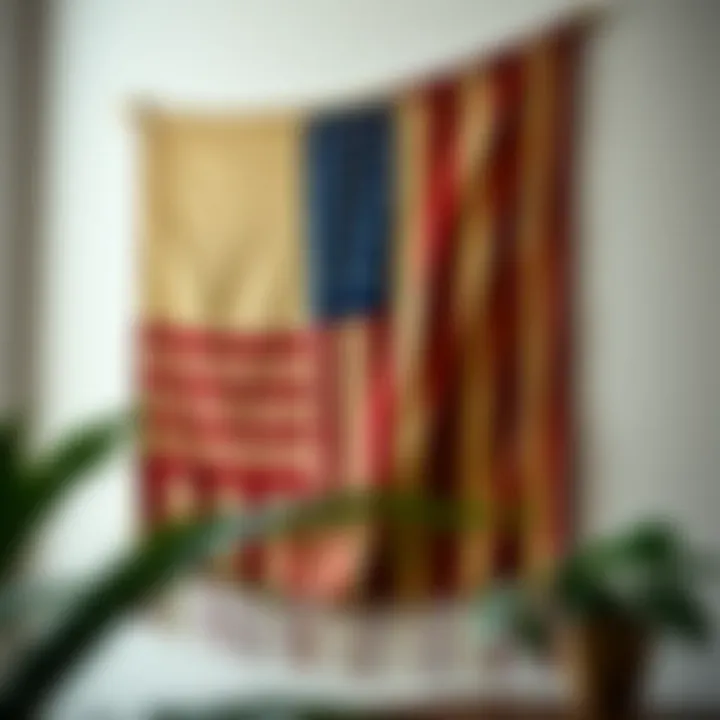
Integrating an American flag tapestry into home décor provides a rich tableau for self-expression and national identity. They can serve as striking wall hangings that capture attention, evoking a sense of pride. Many folk enjoy displaying these tapestries in different settings, from modern minimalist spaces to traditionally styled homes.
- Living Rooms: In this common gathering space, a flag tapestry can create a sense of unity. Families might choose larger pieces as statement walls that lead conversations about heritage and values.
- Bedrooms: Smaller tapestries often provide a more intimate setting. You can place them above beds or cribs to symbolize protection and love, reminding us of the ideals the flag represents.
- Outdoor Spaces: Tapestries aren’t just limited to indoor settings. Utilizing these textiles on porches or patios can add character to outdoor decor, particularly during national celebrations like Independence Day and Memorial Day.
Homeowners have an opportunity to combine multiple layers of design through color schemes that coordinate with other aspects of their homes, ensuring that the American flag tapestry complements their style instead of overwhelming it.
Fashion and Wearable Art
The application of American flag tapestries in fashion showcases an innovative fusion of textile art and personal expression. Designers increasingly recognize the symbolic power these flags hold, leading to exciting collaborations that transform classic garments into wearable art.
- Clothing: From casual tees to elegant dresses, incorporating flag motifs can reflect patriotic sentiments. Often, fashion designers experiment with different cuts and styles, using tapestries to create unique pieces that connect the wearer to their heritage.
- Accessories: Scarves, bags, and hats adorned with flag designs also find their place as stylish statements. These smaller items allow for subtle expressions, letting a wearer showcase their appreciation for American culture without making an overt declaration.
- Pop-up Fashion Events: Flag-themed fashion shows or exhibits provide a platform for designers to display their interpretations of American identity through textiles. Events like these create buzz and foster conversation around current social issues and the historical implications of the flag.
As the intersection of art and fashion continues to evolve, American flag tapestries pave the way for discourse about patriotism, personal identity, and the role of textiles in our everyday lives, offering a textured narrative for both the wearer and the observer.
American flag tapestries encapsulate a unique blend of heritage, decor, and fashion, making them powerful symbols of identity and expression.
Political and Social Dimensions
The political and social dimensions of American flag tapestries are significant, reflecting deeper narratives about identity, patriotism, and societal values. These textiles evolve beyond mere decoration, stepping into the realm of powerful symbols, where the fabric intertwines with the cultural, historical, and political fabric of the nation. Discussions surrounding these dimensions provide critical insights into how the American flag tapestry resonates with diverse audiences, representing not only a national emblem but also personal expressions of belief and affiliation.
Expressions of Patriotism
American flag tapestries often act as vibrant expressions of patriotism, serving as both a home decor staple and a bold statement of national pride. People hang these textiles in their living spaces, offices, or public venues to showcase their connection to the country's ideals. When viewing a tapestry adorned with the flag, one might feel a sense of unity or empowerment.
- Symbol of Unity: During national holidays, it’s common to see these tapestries featured prominently. They evoke a sense of community, as individuals come together to honor their collective identity. A well-placed tapestry can transform a gathering space, turning it into a symbolic arena of shared values and aspirations.
- Personal Touch: Furthermore, people might personalize these tapestries to reflect their unique stories—combining traditional flag designs with regional motifs or personal experiences. It creates a distinctive representation of patriotism, allowing individuals to convey their interpretations of what it means to be American.
"A tapestry isn’t just art; it’s a narrative threaded with the stories of our journey as a nation."
Controversies and Symbolic Critique
While American flag tapestries generally signify patriotism, they sometimes sparkcontroversy and conversations about what the flag stands for in today's society. Some individuals challenge the appropriateness of displaying the flag in certain artistic expressions, raising questions about commodification and the dilution of its significance.
- Redefining Patriotism: As the socio-political landscape shifts, so does the interpretation of symbols. Some artists and activists may utilize flag imagery in a way that critiques existing socio-political structures. It can lead to heated discussions about nationalism and identity, demanding that we scrutinize not just the symbol, but also the frameworks it represents.
- Cultural Appropriation: Another angle of critique hinges on cultural appropriation. For instance, when elements of the flag appear in fashion or decor that doesn’t respect the flag's significance, it can be seen as trivializing its importance. This brings forth a nuanced dialogue about respect, acknowledgment, and the boundaries of creative freedom.
In summary, the political and social dimensions of American flag tapestries resonate deeply with individuals and communities alike. They can foster a sense of belonging while simultaneously inviting critical discourse about national identity and the complexities of patriotism.
Tapestries as a Medium of Protest
The American flag tapestry has evolved into more than just a decorative piece; it serves as a potent symbol of protest and political expression. In a society where textiles carry deep meanings, these tapestries resonate with historical narratives, empowering individuals or movements to voice dissent or support for significant causes. The ability of tapestries to encapsulate sentiments through visuals makes them an extraordinary medium for protest. Here, the rich texture and bold designs can convey messages that words sometimes fail to express.
Artistic Protest Movements
Throughout history, various artistic movements have turned to textiles as a means of protest. For instance, groups like the Women's March have used tapestries adorned with national flags and powerful slogans to encapsulate their messages of equality and justice. The visual impact of using an American flag tapestry can draw attention to issues like inequality, civil rights, or environmental concerns.
Notably, artists often engage with traditional weaving techniques while incorporating modern themes to challenge the status quo. This approach blends the past with present struggles, making the tapestry not just a piece of art but a conversation starter. For instance, during the civil rights movement, artisans would create works that depicted struggles and triumphs, all while incorporating elements of the American flag.
"Art can be a powerful tool for change, weaving narratives that demand attention."
Narratives through Textile
Textiles hold the exceptional capacity to tell stories — stories that can unite or divide, depending on their themes. The American flag tapestry, when used in protest, tells a narrative that may evoke pride, mourning, or a demand for justice. Each thread interlaced carries emotional weight, representing not just the fabric of America but the complexities of its society.
These narratives often include personal stories and collective experiences, which can turn a simple piece of cloth into an emblem of resistance. Artists today are increasingly focusing on weaving personal narratives into their art. This approach not only humanizes the abstract political issues at hand but also engages viewers on a deeper level. For example:
- Social Justice: Tapestries may illustrate specific injustices faced by marginalized communities, emphasizing their voices in a visually accessible way.
- Memorial and Remembrance: They might also serve to remember lives lost due to systemic issues, transforming the flag into a symbol of both mourning and a call to action.
Collecting American Flag Tapestries
When it comes to collecting American flag tapestries, there are layers far beyond merely hanging a textile on the wall. It becomes a dialogue between the past and present, as well as a nuanced reflection of individual beliefs and identities. Tapestries, especially those featuring the American flag, hold a special place not just in art but in the collective mindset surrounding patriotism and cultural representation.

Heritage vs Contemporary Works
In the world of tapestry collecting, one can broadly delineate pieces into two categories: heritage and contemporary works.
Heritage pieces stand as historical artifacts, woven in times when the flag represented specific elements of American identity. These tapestries often employ traditional techniques and materials that harken back to earlier artistic practices. Each thread tells a story, perhaps hinting at the era they belong to, making them highly desirable not just for their aesthetic appeal but also for their historical context. Collectors often treasure these pieces, as they symbolize a lineage of artistry and craftsmanship.
On the flip side, contemporary works embrace modern interpretations and innovative techniques. Artists today manipulate colors and styles to convey messages that resonate with current sociopolitical landscapes. They might blend the traditional motifs of the flag with other elements or styles, enhancing the tapestry's relevance in today’s world. This fusion of art and message often speaks volumes about the societal issues at play, making contemporary flag tapestries sought after by those who wish to align their collections with active dialogues.
"The beauty of collecting American flag tapestries lies in the stories they tell, bridging generations while reflecting current realities."
How to Value Tapestries
Valuing American flag tapestries encompasses a range of factors that can significantly influence their worth. First and foremost is the authenticity of the piece. Provenance matters; tapestries that can be traced back to reputable artists or museums often command higher prices. Collectors tend to seek pieces with some form of documented history.
Next, condition plays a critical role. The materials used—be it silk, wool, or cotton—can degrade over time. Signs of wear, fading, or repairs might lessen the value, but some collectors appreciate these blemishes as indicators of a piece’s storied journey.
Other aspects to consider include:
- Craftsmanship: The skill level demonstrated in the weaving and overall design.
- Rarity: Limited edition pieces or those from notable exhibitions are often in high demand.
- Cultural Significance: Tapestries that resonate with significant historical moments hold intrinsic value beyond their physical attributes.
In a marketplace fueled by emotions and connections, truly understanding what makes a tapestry valuable involves not just looking at the cloth, but also at the stories woven into its fibers.
By navigating these nuances, collectors can tailor their approaches to finding works that speak to both their aesthetic sensibilities and cultural ideals.
Sustainability in Tapestry Production
Sustainability has become a pressing concern across all industries, and textile production is no exception. When considering the American flag tapestry, it’s essential to recognize the significant impact that sustainable practices can have. Not only does sustainability align with environmental stewardship, but it also offers numerous benefits that resonate with consumers’ values and the landscape of modern design.
Environmental Considerations
The tapestry sector, like many others, faces scrutiny regarding its environmental footprint. Traditional textile manufacturing often involves the use of harmful chemicals and processes that can degrade ecosystems. The dyeing process is particularly infamous for its negative impacts, as toxic runoff can pollute water sources.
- Water Usage: Conventional methods consume vast quantities of water; hence, the need to adopt water-efficient techniques is crucial.
- Chemical Waste: Many synthetic dyes are polluting, yet natural dyes derived from plants offer a greener alternative. This shift toward organic materials can encourage biodiversity.
- Energy Consumption: The energy-intensive nature of textile production means that utilizing renewable energy sources can significantly reduce carbon emissions.
It's important to promote a blend of innovative practices that respect the environment without sacrificing the aesthetic integrity of the tapestry. For instance, certain artisans are experimenting with solar energy in their workshops, making the process as green as the fibers they use.
Sustainable Materials and Practices
The choice of materials in tapestry production could make or break its sustainability commitment. Here are a few avenues currently reshaping the landscape:
- Organic Fibers: Cotton and wool sourced from organic farms skip harmful pesticides. The fibers are often stronger and can be dyed without the standard toxic chemicals.
- Recycled Materials: Some artisans are weaving tapestries using recovered or recycled textiles. This not only curtails waste but also adds a unique touch, as each piece tells its own story.
- Local Sourcing: By sourcing materials locally, producers minimize transportation emissions and foster community engagement.
Incorporating these sustainable practices can give American flag tapestries a deeper resonance, appealing to consumers’ growing preference for ethical fashion choices.
As we engage in creating textiles that honor national symbols, selecting sustainable materials gives us the power not only to preserve our culture but also to protect the environment for future generations.
For additional insights into environmental practices in textiles, you might refer to sources such as EPA.gov, or articles on sustainability in fashion on Britannica.com.
Future Trends in Tapestry Art
The evolution of tapestry art reflects the changing currents of culture, technology, and societal values. As with any traditional art form, the American flag tapestry has undergone transformations, mirroring the complexities of modern life. Studying these future trends is paramount, not only for understanding the direction of textile art but also for grasping how cultural symbols adapt to contemporary contexts. Recognizing the emerging trends in tapestry art allows artists and consumers alike to engage with the medium in ways that are both profound and resonant.
Technological Advancements in Textile Art
Advancements in technology have greatly disrupted traditional art-making processes, and tapestry is no exception. Digital weaving machines, for instance, have revolutionized both the design and production of tapestries. Artisans can now create intricate patterns and detailed images that were once labor-intensive and time-consuming. This innovation not only enhances the clarity and precision of designs but also shortens production timelines, allowing for quicker turnarounds on artistic pieces.
Moreover, 3D printing is also pushing boundaries in how tapestries can be imagined and created. By enabling artists to incorporate three-dimensional elements into their textiles, this technology opens up a whole new realm of creativity. Artists might blend traditional fiber with unforeseen materials, remixing the very notions of tapestry and textile art. With these advancements, tapestries can resonate with a new generation of collectors eager for unique, versatile pieces that break from the mold of the past.
In addition to production techniques, social media plays a crucial role in shaping the dissemination of tapestry art. Artists can use platforms like Instagram and Pinterest to showcase their work, directly engaging with art enthusiasts and potential clients. This digital connection not only serves as a marketing tool but also fosters a sense of community among tapestry lovers, leading to collaborative projects and exchanges of ideas that would have been impossible before.
Fusion of Traditional and Contemporary Styles
The fusion of traditional and contemporary styles is indeed a hallmark of the current tapestry landscape. Many artists are venturing beyond mere replication of classic techniques, instead celebrating the juxtaposition of old and new ideas. This blending often results in vibrant tapestries that can resonate with both history buffs and modern art aficionados alike.
The use of modern themes and motifs in traditional tapestry formations has gained traction. For example, incorporating modern social issues into the fabric—like climate change or digital culture—provides a platform for expression that reflects contemporary concerns. By doing so, artists can create pieces that are not only visually captivating but also carry powerful messages, making them highly relevant in today’s dialogue.
In addition, artists are often revisiting native techniques, exploring indigenous styles and methods, and adding their unique twist to these age-old practices. Such endeavors respect the original craftsmanship while infusing it with fresh perspectives, creating artifacts that appeal to collectors who value heritage and innovation.
"The tapestry isn’t just a decorative element; it’s a narrative woven into every thread," says contemporary textile artist Jane Doe.
As these trends develop, they suggest a hopeful direction for the tapestry as an art form. Future explorations will likely continue to question, challenge, and redefine what it means to create and engage with textiles in a complex, interconnected world.
By embracing these shifts, artists and enthusiasts alike foster a lively dialogue that celebrates the past while eagerly anticipating the future.