
Exploring the Art of Embossed Envelope Seals
Intro
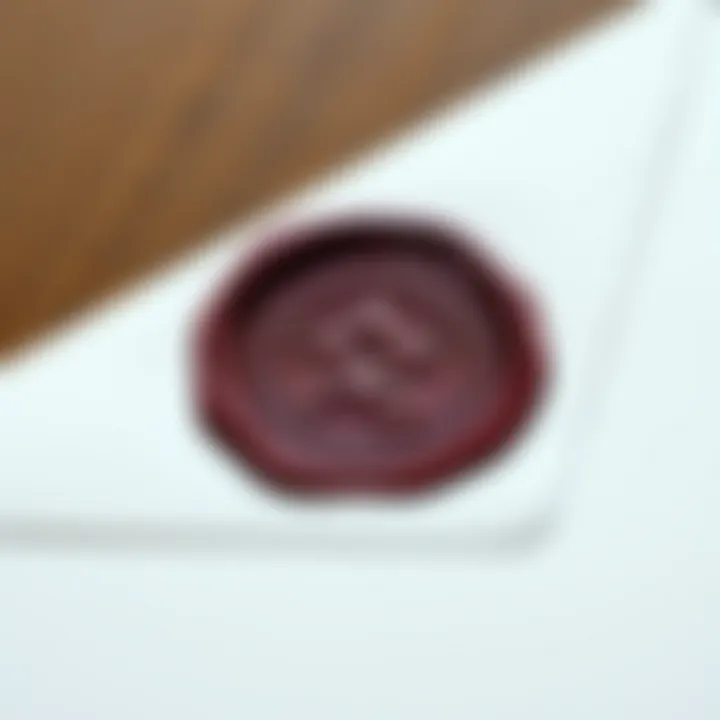
In a world constantly evolving in communication forms, where pixels and bytes reign supreme, there lies an enduring charm in the tactile allure of embossed envelope seals. These miniature works of art tell stories beyond mere functionality. They represent traditions, sentiments, and a touch of class that often seems lost in the digital shuffle. So when someone receives a letter adorned with an embossed seal, it’s more than just an envelope; it's a reminder that communication can also be a sensory experience.
Introduced centuries ago, embossed seals have roots deeply embedded in history. They were once a symbol of authority and authenticity, often associated with nobility or official documents. The unique pressure applied to create these seals would leave an indelible mark, a visual declaration of legitimacy. Fast forward to today, and these decorative elements have transitioned into a form of personal expression, blending artistry with practicality.
Understanding the significance of embossed seals involves examining various aspects—from their historical significance to contemporary applications. The charm doesn't stop at their aesthetic appeal but extends to the materials used, the techniques employed in their creation, and the emotional weight they carry within the realms of personal and professional correspondence.
As we delve deep into the world of embossed envelope seals, we'll explore how different designs harmonize with cultural narratives, and why they remain relevant amidst a sea of digital communication. This exploration will not only illuminate their past but also reveal how they continue to resonate with individuals seeking a timeless touch in their correspondence.
Intro to Embossed Envelope Seals
When discussing the art of communication, one cannot overlook the impact of embossed envelope seals. These unique touches serve as more than just decorative elements; they convey a sense of prestige and thoughtfulness often missing in today's digital exchanges. An embossed seal transforms a simple envelope into a work of art, intertwining creativity with functionality. It elevates the content inside, making it feel special and significant. This article illuminates the multiple facets of embossed seals, showcasing their lasting relevance in modern correspondence.
Definition and Purpose
Embossed envelope seals are manufactured by creating raised designs pressed into the surface of the envelope, typically made of paper. The process results in a tactile feature that is visually appealing. The primary purpose of these seals goes beyond mere aesthetics; they serve as a form of closure, securing the envelope while also delivering a statement about the sender's identity and values. Whether used in business correspondence, invitations, or personal letters, embossed seals can set a tone of elegance and class that digital forms of communication often lack.
Historical Overview
The narrative of embossed seals can be traced back through centuries, revealing their role in shaping communication.
Early Uses in Communication
Initially, embossed seals were primarily functional tools employed to authenticate documents. They acted as signatures, ensuring the legitimacy of letters in a time when trust was scarce. In ancient cultures, such as those in Mesopotamia and Egypt, seals were made from stone or clay and often bore symbols significant to the issuer. This not only safeguarded the message but also provided a personal connection between sender and recipient. The unique feature of these seals — the customization with individual symbols — made them an appealing choice, as it allowed senders to express their uniqueness.
The advantage of utilizing embossed seals in early communication was twofold: the tangible impression left on wax or paper provided crucial evidence of authenticity, while the artistry involved lent a personal touch. Conversely, their exclusive use often meant that only the elite could afford such embellishments, leaving common folk without access to these symbolic tools of communication.
Role in Royal Correspondence
In royal court communication, embossed seals reached unmatched levels of significance. They were not mere decoration but symbols of authority and governance. Royal seals communicated power and prestige, transforming a simple letter into a document of immense weight. They provided assurance that what lay within the envelope bore the mark of the crown, a factor of immense importance in negotiations and governance. Each embossed royal seal was a crafted emblem, often featuring intricate designs that represented the monarch's lineage or kingdom, thus making them quite a spectacle.
The benefit of using such seals in this context was clear: they combined both an emblem of trust and a barrier of security against tampering. However, the reliance on elaborate designs and the cost of production meant it was often inaccessible to anyone outside of the upper echelon, reinforcing social stratifications.
Finale of Section
Understanding the origins and functions of embossed envelope seals opens up a fascinating dialogue about their role in both historical and contemporary context. Their evolution from a practical tool to a sophisticated form of expression reflects wider changes in communication norms, showing how even in the most modern times, the charm of a simple seal can create lasting impressions.
Design Elements of Embossed Seals
When diving into the realm of embossed envelope seals, one cannot overlook the significance of design elements. They serve not just an aesthetic purpose but convey messages, emotions, and identity. Every shape, motif, and material contributes to the story the seal tells. Getting the design right can elevate communication to a level of artistry. Well-crafted seals don’t just seal letters; they encapsulate moments and sentiments.
Shapes and Motifs
Common Symbols and Their Meanings
Common symbols found in embossed seals are steeped in meaning. Think of a lion, often representing courage or power, or an owl, symbolizing wisdom. Such motifs are more than mere decorations; they add layers of interpretation to the correspondence. Their selection is critical in reinforcing the message contained within the envelop. A sophisticated motif can create a strong impression, showcasing thoughtfulness and attention to detail.
- Key Characteristic: The ability of symbols to convey complex ideas succinctly makes them a popular choice in design.
- Unique Feature: Each symbol has a distinct narrative that enriches the context of the envelope seal.
- Advantages: Choosing the right symbol can evoke the intended emotions strongly; however, misinterpretation is a risk if the symbol chosen doesn’t align with the audience’s expectations.
Geometric vs. Organic Designs
When it comes to design, the debate between geometric and organic shapes holds weight. Geometric designs exude precision and stability, embodying a sense of order. On the other hand, organic designs often feel more free-flowing, representing nature or personal connection. Choosing the right one can significantly influence the overall effect of a seal.
- Key Characteristic: Geometric designs are often more modern and clean, while organic shapes resonate more on an emotional level.
- Unique Feature: The choice between the two can communicate personality, and intent. Geometric may boast of professionalism, whereas organic might suggest warmth and creativity.
- Disadvantages: Geometric designs might seem cold and unapproachable, whereas organic designs can lack clarity and solidity in more formal contexts.
Material Choices
Types of Paper and Cardstock
The substrate of an embossed seal is just as important as its design. Paper and cardstock vary widely and contribute to not only the appearance but also the tactile experience of the seal. High-quality paper can elevate the entire correspondence, giving it weight and substance, allowing the embossed elements to shine through.
- Key Characteristic: Heavier stock generally holds impressions better and can lend gravitas to the communication.
- Unique Feature: Specialty papers are often crafted to be more absorbent, ensuring that the embossed seal maintains clarity.
- Advantages: Different textures and finishes can be used to enhance visual appeal, adding an inviting touch, though they may increase costs and handling considerations.
Wax vs. Adhesive Seals
Wax and adhesive seals are two vastly different options providing distinct advantages and challenges. Wax seals are often viewed as more traditional, evoking a sense of history and formality, adding a classic touch to any letter. On the contrary, adhesive seals offer convenience and a broader variety of designs.
- Key Characteristic: Wax sealing often involves a bit of ritual, making the act of creating the seal feel more special compared to the quick nature of adhesive.
- Unique Feature: Wax can come in various colors and finishes, making it customizable to fit themes or specific aesthetics.
- Disadvantages: The use of wax can be more time-consuming and may not be as practical for mass communications; adhesive seals may lose their charm over time and can be less secure than wax seals.
In summary, the design elements of embossed seals are foundational in crafting a meaningful communication tool. Every choice from shape to material can dramatically impact how a message is received, bringing artistry and function into our correspondence.
Embossing Techniques
Embossing techniques play a pivotal role in the world of personalized communication. They bring a tactile element to envelopes that catches the eye and creates a sense of prestige. Understanding various methods of embossing not only enhances the quality of the seals but also provides insights into the artistry behind them. It allows individuals and businesses to infuse their identity into their correspondence, making it stand out in the ever-evolving landscape of communication.
Traditional Methods
Handheld Tools
Handheld tools for embossing are the craftsman’s best buddy. Picture someone with a simple, yet effective, brass seal stamp, pressing down onto a warm piece of wax. This method is enjoyably tactile, allowing the user to feel the pressure as they press down, creating an imprint that represents their personal mark or brand. The characteristic of handheld tools is their simplicity and effectiveness. Just one tool can create a multitude of designs based on the pressure applied and the detail in the seal.
One significant advantage of using handheld tools is their accessibility. They can be used almost anywhere, requiring minimal setup and no expensive machinery. However, the downside can be their inconsistency; each impression may vary slightly based on the user’s technique and the wax’s temperature. Still, this small imperfection can give each seal a unique charm, something that’s lost with more modern methods.
Heat Application Techniques
When thinking about heat application techniques, it's all about precision. This method usually involves a heated die and special paper or wax that reacts uniformly to heat. The hallmark of heat application is its ability to produce clean and consistent designs. The advantage here is clear—each seal can look almost identical, which is often desirable for professional settings, such as law firms or corporate communications.
The unique feature of heat application is its versatility; it can be used on various materials, from thick cardstock to thinner foils. However, it comes with its own set of challenges, such as requiring more equipment and a reliable heat source. A careless mistake can lead to burnt embossings, ruining the overall aesthetic. Yet, when done correctly, it produces elegant seals that scream sophistication.
Modern Innovations
Digital Embossing Processes
As technology advances, so too do the methods of embossing. Digital embossing processes offer a modern twist, allowing for intricate designs that were previously hard to achieve with traditional methods. This technique utilizes software to design seals digitally, which can then be produced using specialized machinery. The main characteristic of this method is the ability to achieve a level of complexity that manual methods simply can't match.
This innovation is particularly beneficial for larger businesses needing a consistent branding approach without sacrificing detail. The downside? The initial investment in machinery can be considerable, plus there’s a learning curve involved. However, the payoff is often worth it as brands can create bespoke designs that make their envelopes memorable and relevant in a digital world.
Combining Techniques for Unique Effects
Combining traditional and modern techniques opens a world of possibilities. For example, one might use heat application to add a base seal and then digitally enhance it with more intricate designs. This method embraces the beauty of handmade while still leveraging modern technology to achieve an extraordinary end product. The key feature is the unique combinations of textures and patterns, resulting in complex, layered embossings that tell a story of artistic mastery.
The advantages of combining methods include the ability to cater to diverse clientele. A boutique might want handcrafted elements for that personal touch while larger corporate clients may prefer the polish of digital embossing. However, the challenge lies in mastering both approaches and ensuring the final product can stand the test of time and trends.
"Embossing is not just an art; it’s a fusion of tradition and innovation that leaves a lasting impression."
In summary, embossing techniques matter significantly. Traditional methods provide a hands-on approach, while modern techniques offer precision and detail. Understanding these methods enables creators to decide which approach aligns best with their needs, leading to stunning and effective embossed seals.
Cultural Significance of Embossed Seals
When you talk about embossed seals, it’s not just about pretty designs or fancy envelopes. Their cultural significance weaves through the fabric of various societies over the ages, carrying stories of authority, identity, and personal connection. Each seal embodies a narrative, extending beyond mere aesthetics to symbolize deeper meanings that resonate throughout history.
Symbols of Authority
Usage in Governance

In the realm of governance, embossed seals stand as beacons of authority and legitimacy. They have long been utilized by officials to authenticate documents, creating a kind of visual shorthand for permission and endorsement.
The key characteristic of these seals is their ability to convey a sense of seriousness. When a document is embellished with an embossed seal, it transforms from a simple piece of paper into an authoritative statement. Think of it like this: when you see a seal, it’s like witnessing a stamp of approval that resonates with gravitas and responsibility. This aspect is popular due to its historical roots; many nations have adopted similar practices that trace back centuries, ensuring the continuity of tradition and respect for law.
One unique feature of using embossed seals in governance is the tactile experience they provide. Unlike a mere signature or printed label, the raised design invites touch and engagement. This sensory interaction fosters trust and genuine connection between the governing body and its citizens. However, on the flip side, there are instances where the overuse of seals may contribute to bureaucracy's slow nature, creating a bottleneck in processes that require swift execution.
Tradition in Legal Documentation
Legal documentation often embraces embossed seals to bolster authenticity and create a sense of formality. This tradition also adds weight to legal agreements, contracts, and deeds. The key attribute here is the air of permanence that embossed seals impart, suggesting that what’s documented will stand the test of time.
Choosing to employ embossed seals in legal contexts is beneficial for several reasons. Not only does it enhance the professionalism of materials, but it also aids in prevention against fraud. With the distinct design imprinted into the paper, forgers would find it challenging to replicate something so intricate, much like trying to copy an artist’s brushstroke.
The unique aspect of this tradition is the blend of art and legality. An embossed seal can reflect the values or identity of an organization or individual, often incorporating symbols representative of their mission or ethos. However, in more informal circumstances, it might ooze over-formality, which can deter parties looking for a more approachable or casual interaction.
Personalization and Identity
Custom Designs for Individuals
The personalized use of embossed seals speaks volumes about identity. It’s not just about making correspondence stand out; it reflects the individuality of the sender. These designs encapsulate personal traits, values, or significant life events, making them a cherished emblem of self-expression.
What sets custom designs apart is their ability to resonate with the creator. The key characteristic lies in their unique nature; they can represent anything from family crests to personal initials, and often stir a sense of belonging. This aspect is widely regarded as a beneficial choice for those looking to elevate their personal branding in a world inundated with generic messages.
Another unique feature of embossed seals for individuals is their potential to become heirlooms. A well-crafted seal may be passed down through generations, imbued with memories and history that solidify its emotional value. However, the downside could be the meticulous design process; it requires thoughtful consideration to ensure it truly reflects the essence of the individual.
Role in Celebratory Events
When it comes to celebratory events, embossed seals play a majestic role. From weddings to milestone anniversaries, they add a touch of elegance and formality that resonates with the occasion’s significance. Imagine receiving a wedding invitation adorned with an embossed seal; it immediately raises expectations.
The hallmark of these seals in celebratory contexts is their capability to signal formality and importance. They act as a visual cue that conveys care and effort in the crafting of an invitation, bridging the emotion of the event to the recipient. This popularity in using such seals draws on the connection between celebration and tradition, reinforcing bonds during communal festivities.
What’s particularly unique is that embossed seals can also be customized to mirror the couple’s personality or the theme of the celebration, fostering a greater sense of connection. Nonetheless, some people might find this an unnecessary extravagance, especially in informal social settings where simpler invitations could suffice.
Practical Applications
The practical applications of embossed envelope seals go far beyond mere aesthetics; they serve crucial functions in both business and personal communication. You can think of these seals as a bridge between formality and artistry, providing a unique way to express identity and intention. Businesses are always on the lookout for methods to distinguish themselves in a sea of sameness, and embossed seals fit the bill nicely. Not only do they tell the recipient that a message is important, but they also create a lasting impression.
Business Uses
Branding and Marketing
When it comes to branding and marketing, embossed envelope seals act like a well-designed storefront. They immediately grab attention, suggesting that the content inside is of equal quality. Companies often leverage this tactile value to emphasize a message of exclusivity and craftsmanship. The key characteristic of embossed seals in branding is their ability to convey professionalism. If a business uses a regular, plain envelope, it can sometimes be perceived as being run-of-the-mill or unremarkable. On the other hand, an embossed seal broadcasts that a business pays attention to detail.
Moreover, the unique feature of these seals is their versatility. Whether used for invitations, contracts, or promotional materials, they consistently elevate the perceived value of documents. The advantage here is significant; a well-embossed seal can lead to competitive differentiation, while a poorly executed one risks appearing amateurish. So, the choice of embossing technique and design becomes paramount in ensuring that the seal reflects the brand’s image accurately.
Creating Memorable Impressions
Speaking of standing out, creating memorable impressions is another avenue where embossed seals shine. In a world saturated with digital communication, the simple act of receiving an embossed envelope can evoke a sense of nostalgia and genuine interest. The unique quality of these seals is their capacity to capture attention and enhance engagement. When someone sees an embossed seal, it piques curiosity and often prompts a careful unsealing of the envelope, thereby increasing the likelihood that the message will be read.
This is particularly beneficial for businesses that depend on word-of-mouth recommendations. When clients receive beautifully crafted communication materials, they are more likely to share their positive experiences with others. However, there is a trade-off; the cost of embossing techniques can be higher than standard printing methods. Marketers must weigh the advantages of heightened brand presence against the potential expense. By carefully aligning the use of embossed seals with specific marketing goals, businesses can maximize their effectiveness in creating lasting impressions.
Personal Correspondence
Wedding Invitations
The realm of personal correspondence brings embossed envelope seals into a different light, notably in wedding invitations. Wedding invitations often set the tone for the entire event, acknowledging that this is not just an ordinary gathering; it is a celebration of love and commitment. The key characteristic of embossing in this context is its elegance and formality. An embossed seal on a wedding invitation can reflect the style of the couple, be it traditional, modern, or even whimsical.
For one, the unique feature of embossed seals in weddings is their tactile quality that encourages guests to cherish the invitation as a keepsake. By using embossed seals, couples can communicate immediate significance and attention to detail, which is critical for such a momentous occasion. Despite the various benefits, couples must consider the costs and the production time involved, which can be longer than standard printing. This is often justified by the lasting effect it creates.
Special Occasion Letters
Lastly, special occasion letters—whether for anniversaries, birthdays, or holiday greetings—benefit greatly from embossed seals. The use of these seals adds a touch of sophistication and care, ensuring that the recipient feels valued and appreciated. The key characteristic of this application is its ability to personalize an otherwise traditional form of communication. Instead of a generic card, an embossed seal indicates a level of effort and thoughtfulness that speaks volumes.
What’s unique about embossed seals for special occasions is that they make the recipient feel important, giving the impression that the sender truly values their relationship. While the creation of embellished letters does involve additional costs, many find that the emotional impact and satisfaction from the recipient far outweigh these considerations.
"The tactile experience of opening a letter sealed with care transforms every reading into an event."
Collecting Embossed Seals
Collecting embossed seals is more than just a hobby; it can be seen as a journey through history and culture. Each seal tells a story, providing insight into the time period, the owner’s identity, and the craftsmanship involved. The tactile nature of these seals enhances the collectibility, inviting enthusiasts not just to appreciate their beauty but to also explore the narratives behind them.
One of the primary benefits of collecting these seals is their ability to connect collectors with various historical contexts. A seal from a significant era, to illustrate, can evoke an understanding of the societal norms or political climates that influenced its design. It’s not merely about possession; it's about preserving history, allowing future generations to glimpse the past through these physical tokens.
As with any passionate pursuit, the journey of collecting embossed seals has its own set of considerations. Factors such as authenticity, the condition of the seal, and its provenance can greatly affect both its value and significance, making it imperative for collectors to be well-informed and vigilant.
Finding and Acquiring
Antique Shops and Auctions
Venturing into antique shops and auctions offers a treasure trove for collectors of embossed seals. These venues are often filled with artifacts that carry not just age but stories waiting to be discovered. Antique shops tend to have a unique characteristic; they foster an atmosphere of nostalgia, often allowing collectors to sift through a curated assortment of items that have weathered time.
A significant advantage of shopping at these locations is the opportunity to engage directly with sellers and, sometimes, even previous owners. This might reveal valuable information about a seal’s history that isn’t available online. However, navigating through the myriad items can also present challenges—finding the right seal amidst many may take time, and prices may vary widely depending on the store's pricing strategies.
Online Marketplaces
On the flip side, online marketplaces have transformed how collectors find and acquire embossed seals. Platforms like eBay or Etsy present an expansive range of options at the fingertips of collectors. The key characteristic of these marketplaces is their accessibility; users can peruse countless listings from the comfort of their homes, often discovering seals that may never appear in local shops.
However, while this convenience is a boon, it comes with its own caveats. The authenticity and condition of items can sometimes be difficult to verify without seeing them in person. Nevertheless, diligent collectors can benefit from seller ratings and return policies that provide some level of reassurance when making a purchase.
Preservation Techniques
Proper Storage Methods
The longevity of embossed seals greatly relies on proper storage methods. Storing these collectibles in spaces free from moisture and direct sunlight is crucial to maintaining their integrity. Utilizing acid-free paper and archival boxes can further protect seals from environmental damage.
This careful handling is paramount, and it allows collectors to appreciate their seals for years to come. A characteristic of proper storage is its unobtrusiveness; the goal is to provide a safe haven for the seals without detracting from their beauty when displayed. However, collectors might face challenges when considering the space required for adequate storage—a balance between accessibility and preservation often becomes necessary.
Displaying Seals as Art
Displaying embossed seals as art is another captivating way to appreciate these collectibles. Many collectors choose to present their seals within frames or shadow boxes, allowing the artistry and intricacies of the seals to shine in a way that is visually engaging. This not only showcases the seals but also adds an artistic flair to the interiors of a home or office.
An interesting feature of this approach is its dual purpose: while the seals are on display for admiration, they are also preserved from damage by environmental factors. However, there are considerations to bear in mind; displaying seals too directly in sunlight can lead to fading, and finding the right balance of light is important to maintain their beauty.
Collectors play an essential role in preserving history, art, and culture through their dedication to embossed seals. Their careful curation and love for these artifacts breathe life into the past, ensuring that stories are not lost to time.
Finale: The Enduring Appeal of Embossed Envelope Seals
In a world drenched in digital communication, the allure of embossed envelope seals persists as a vivid reminder of tradition and artistry. Their tactile and visual presence imbues correspondence with a level of significance that transient emails simply cannot replicate. This article has traced the evolution and relevance of these seals, revealing their role as both decorative and functional elements that contribute to the overall aesthetic experience of sending and receiving mail.
Relevance in Digital Age
Today, as emails flood our inboxes and instant messaging dominates interactions, you might wonder why embossed seals still hold value. The simple fact is that amidst the flurry of digital noise, any tangible, personalized touch stands out like a beacon. Embossed envelope seals represent a physical connection, a craft that recalls the beauty of handwritten letters. It’s not merely about sealing an envelope; it's about creating a memorable experience.
Consider this: a beautifully embossed seal can transform a plain envelope into a personal treasure. It's especially significant during events like weddings or milestone anniversaries, where the seal conveys a message of love and care. Engaging clients and audiences through charmed, sealed correspondence can also bolster brand identity for businesses, making a lasting impression in the recipient's mind.
Final Thoughts
In summary, even with technology evolving at breakneck speed, the charm of embossed seals continues to flourish. They are not just relics of the past; instead, they form a beautiful bridge connecting ages. Crafting a message wrapped in such thoughtful detail speaks volumes about the sender’s desire to connect on a deeper level. It’s a nod to tradition, an embrace of creativity, and ultimately, a statement of elegance.
So, next time you’re penning a letter or sending out invitations, consider adding that seal of distinction. It may just turn an ordinary communication into something extraordinary, allowing recipients to feel treated to a personal touch that the digital realm often overlooks.
"High quality communication is not just what you say, but how you choose to express it."
Preserving the art of embossed seals is about cherishing history while engaging the present. Now, more than ever, take a step back from the screen and indulge in the beauty of what’s tactile, vivid, and rich in meaning.